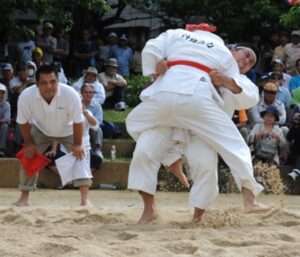
Wrestling has been a popular form of combat sport throughout history, with various styles and techniques developed by different cultures around the world. One such intriguing style is Shima, also known as Okinawa wrestling or Okinawan sumo, which showcases the distinct martial arts heritage of the Okinawan people. Shima stands apart with its emphasis on belt grip and power moves, making it a captivating and dynamic wrestling sport.
In contrast to Japanese Sumo, Okinawa Sumo sets itself apart by adopting judo uniforms instead of the traditional sumo belt. Shima is characterized by the gripping of opponents’ belts, creating a firm connection between the wrestlers. This belt grip serves as the foundation for executing powerful throws, which require a combination of lifting and footwork skills. Unlike other wrestling styles that may focus on agility and speed, Shima prioritizes raw strength and technique to overcome opponents.
Rules and customs.
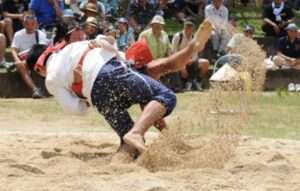
The wrestling ring is prepared by spreading sand or sawdust on a circular surface measuring 7 meters in diameter. One notable difference between Okinawan Sumo and other wrestling styles is the absence of boundaries or ropes that enclose the fighting area.
Unlike traditional Sumo, there is no “tachiai” in Okinawan Sumo, meaning the wrestlers do not engage in the ritualistic pre-match face-off. Instead, participants begin by firmly gripping their opponent’s belt, with the right hand going inside from below and the left hand holding the right side of the belt from the outside.
The fight.
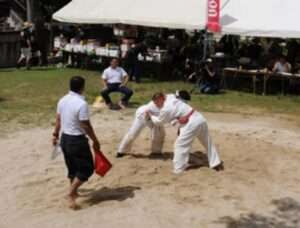
As the bout unfolds, the wrestlers engage in a low squat position, enhancing their balance and stability. Throughout the match, a referee oversees the action, ensuring fairness and adherence to the rules. The objective of a Shima match is to throw the opponent and force them onto their back on the ground. Competitions generally follow a format of best two out of three falls, with a time limit of five minutes per bout. If the time expires, referees collectively determine the winner, which is then announced by raising a white or red flag, symbolizing the victorious wrestler.
The victory.
The winner is determined by executing a winning